Preventing Frozen Pipes: The Basics
You turn the kitchen tap and nothing comes out. Or a thin trickle does, hours after the bathroom faucet did the same thing this morning. Somewhere inside a wall or a crawlspace, water has stopped moving because a section of pipe has frozen. The next 24 hours decide whether the pipe thaws cleanly or splits and floods a room.
A single 1/8-inch crack in a burst pipe can release hundreds of gallons a day. Prevention is always cheaper than the repair. Roto-Rooter's plumbers handle frozen pipe thaws and burst pipe emergencies year-round 24/7, and they see the same preventable mistakes every winter so the steps below address all of them.
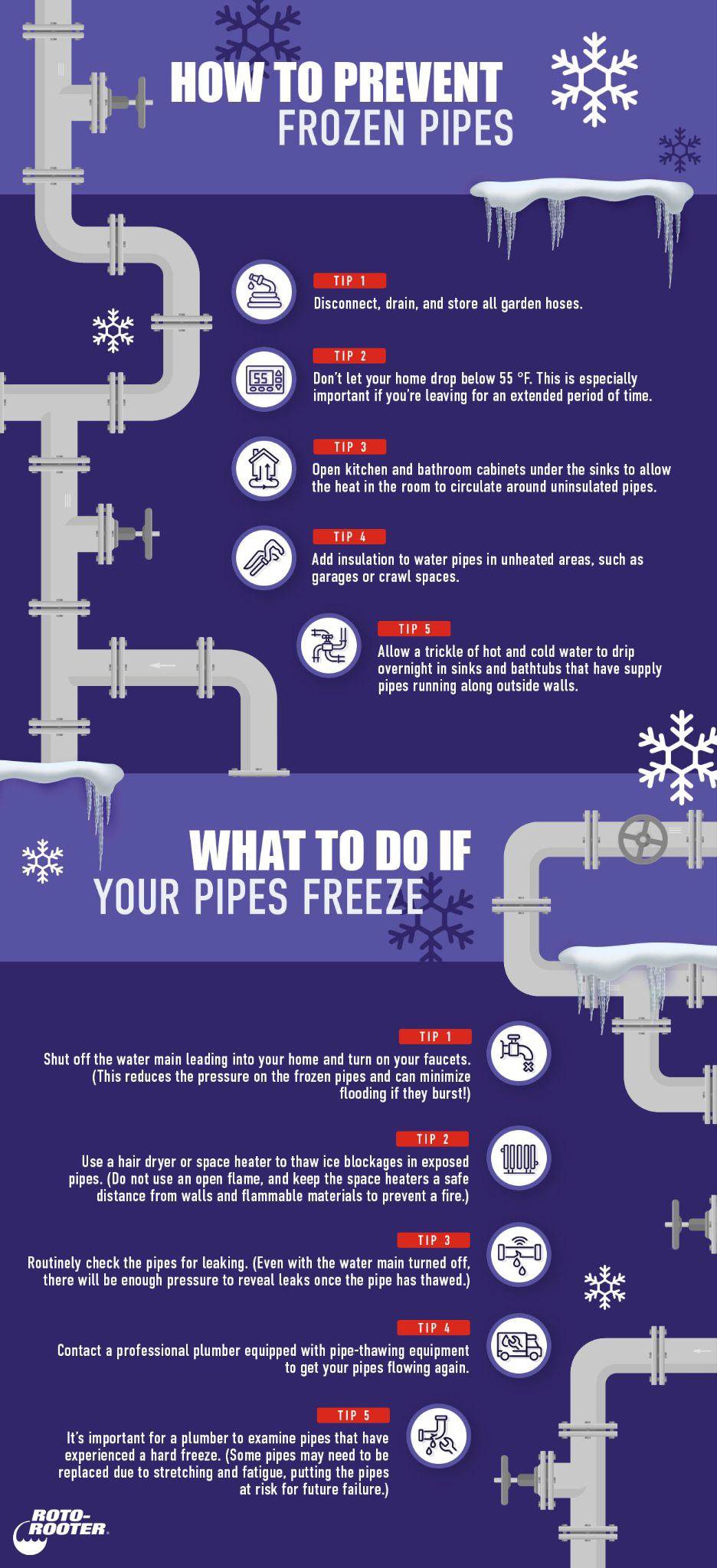
See all five in our infographic below.
The Five Prevention Tips From the Roto-Rooter Frozen Pipes Infographic
- Disconnect, Drain and Store Your Garden Hoses: A hose left attached to an outdoor spigot traps water at the connection. That water freezes, expands and cracks the spigot or the pipe behind the wall it connects to. Detach every hose before the first hard freeze, drain them and store them indoors.
- Keep Your Home at 55 Degrees Fahrenheit or Higher: The Roto-Rooter frozen pipes infographic calls this out specifically: do not let indoor temperature drop below 55 degrees Fahrenheit. This matters most when the house will be empty for an extended period. A vacation setback that saves energy at 45 degrees also produces a pipe failure that erases every dollar of savings within an hour.
- Open Kitchen and Bathroom Cabinet Doors: Pipes under sinks on exterior walls sit in uninsulated cavities. Opening cabinet doors lets warm room air circulate around those pipes during cold snaps. This single action prevents more frozen pipe calls than almost any other cold-weather prep step.
- Add Insulation to Pipes in Unheated Areas: Foam pipe sleeves, heat tape or UL-listed heat cable on exposed runs in garages, attics and crawlspaces are the difference between a rough night and a repair bill. Insulation costs a few dollars per foot. A burst pipe costs thousands.
- Trickle Hot and Cold Water Overnight: The infographic recommends a trickle from sinks and bathtubs supplied by pipes running along exterior walls. Running water does not freeze as easily as still water, and the slight pressure release also prevents the pipe from rupturing when a small ice plug does form.
What to Do If Your Pipes Freeze
The infographic outlines five response steps. Follow them in order:
- Shut Off the Water Main: Turn off water at the main shutoff leading into the home. Then open faucets throughout the house to relieve pressure on the frozen section. Releasing pressure is what minimizes flooding when the pipe thaws.
- Apply Heat With a Hair Dryer or Space Heater: Use a hair dryer, an electric heating pad, a space heater at a safe distance from walls or towels soaked in hot water. Never use a blowtorch, propane heater, charcoal stove or any open flame, which the infographic flags specifically as a structure-fire risk.
- Check for Leaks Repeatedly as the Pipe Thaws: A frozen pipe with a hairline crack will not leak until the ice plug melts. Check the pipe and surrounding area continuously during thawing. The water main stays off until you are confident no leak exists.
- Call a Professional for Pipes You Cannot Reach or Thaw: Pipes inside walls, beneath slabs or in inaccessible crawlspaces need professional pipe-thawing equipment. Attempting to reach them without the right tools turns a frozen pipe into a flooded wall cavity.
- Have a Plumber Inspect the Pipe Post-Thaw: A pipe that experienced a hard freeze may need replacement even after thawing cleanly. The infographic explicitly notes that some pipes stretch and fatigue during freezing, putting them at risk for future failure. A post-thaw inspection catches those pipes before the next cold snap.
Frozen Pipes FAQs
What Temperature Should I Keep My House at to Prevent Frozen Pipes?
55 degrees Fahrenheit is the minimum the infographic recommends, day and night. Lower setpoints save energy in the short term but create freeze risk on the coldest nights.
Hold the thermostat at the same temperature throughout the day and night. A night setback that drops the home to 50 degrees or below eliminates the thermal mass that keeps pipes in exterior walls above freezing. The extra heating cost of holding 55 degrees is always less than the repair cost of a single burst pipe.
How Do I Thaw a Frozen Pipe Safely?
Use a hair dryer, space heater, heating pad or towels soaked in hot water, applied to exposed pipe sections after the water main has been shut off. Never use an open flame, blowtorch, propane heater or charcoal stove.
Start heat application at the faucet end of the frozen section and work back toward the blockage. This gives melted water somewhere to go as the ice plug releases. Keep checking the pipe and the floor below for moisture as thawing progresses, because a hidden crack will only leak once the ice is gone.
Should I Drip Faucets During a Hard Freeze?
Yes, particularly from fixtures supplied by pipes running along exterior walls. Both hot and cold taps should trickle overnight during the coldest stretches.
Moving water is much more freeze-resistant than still water. The trickle also relieves any pressure buildup that might otherwise rupture a pipe when a small ice plug forms. A tap dripping at pencil-lead thickness uses about a gallon an hour, which is trivial compared to the cost of a burst pipe repair.
What Do I Do If a Pipe Has Already Burst?
Shut off the water main immediately and call a plumber. A burst supply line releases enough water to damage flooring, drywall and subfloor within minutes.
Open faucets to drain remaining pressure from the lines once the main is off. Document the damage with photos before cleanup starts, because insurance carriers will ask for them. Move electronics, important documents and valuables out of the affected area if safe to do so, and start extraction or contact a water damage restoration team if the flooding is significant.
How Much Water Can a Burst Pipe Release?
A 1/8-inch crack in a supply line can release around 250 gallons of water per day. That is enough to saturate carpeting, warp hardwood flooring and create mold conditions within 24 to 48 hours.
Larger ruptures release vastly more. A fully split supply line at household pressure can dump 500 to 1,000 gallons per hour. The speed of a shutoff response determines whether the repair is contained to a single room or spreads across multiple floors.
When Should I Call a Plumber for a Frozen Pipe?
Call a plumber when you cannot locate the frozen section, cannot reach it or cannot safely apply heat to it. Call immediately if a pipe has already burst or if damage appears inside a wall cavity or beneath a slab.
Pipe-thawing equipment, leak detection tools and pipe replacement capability are standard on our service calls, and our technicians handle the full sequence from diagnosis through repair in a single visit in most cases. Waiting for a frozen pipe to thaw on its own often turns a preventable situation into an emergency.
Loading customer reviews...