Sewer Line Excavation and Trenchless Repair in Shreveport
Key Takeaways: Digging a Sewer Trench in Wet Shreveport Ground
- A line that keeps backing up: repeated blockages in the same stretch point at a defect in the pipe, and a camera inspection is what confirms it before anyone quotes a dig.
- Shallow groundwater: on the low terrace ground across Shreveport the water table sits close to the surface, so a trench at working depth starts taking on water almost immediately.
- Soil that will not stand: silt and soft clay slump into an open face, so shoring, a benched or sloped excavation and stone bedding are part of the plan from the beginning.
- Older pipe underneath: much of this city was built long before plastic, so vitrified clay and cast iron laterals with many joints are common findings.
- Wet ground and open joints feed each other: groundwater entering a cracked joint carries fines out of the bedding, a void forms and the run settles.
- Trenchless has conditions: pipe bursting and cured-in-place lining need a host pipe in reasonable shape and access at both ends.
- Your lateral, the city's main: the buried run from the building to the connection is normally the property owner's, and the jurisdiction sets where that ends.
- Roto-Rooter is fully licensed and insured, pulls the permit, arranges the inspection and compacts the backfill in lifts so the yard does not sink later.
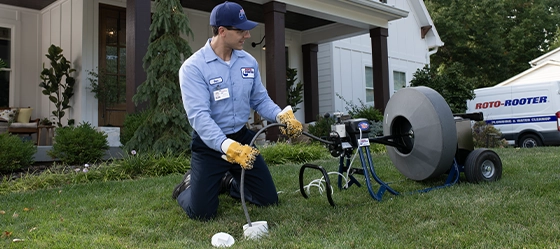
Most writing about sewer replacement treats the trench as the easy part and the pipe as the interesting part. On the ground Shreveport sits on, that is backwards. Getting a clean, stable, dry-enough hole down to a failed lateral is the piece of this work that takes planning, and everything else follows from it.
The city grew on low terrace ground in the river valley of northwest Louisiana, and the soil profile is silt and soft clay laid down by water. The water table sits close to the surface across much of Caddo Parish, and it rises further through the long stretches of sustained spring rain and again when tropical moisture tracks inland in late summer. Dig a trench four or five feet down in that during a wet stretch and it will find water on its own.
Two things follow for anyone digging in Shreveport. The walls of an open cut in this soil will not stand up unsupported, so shoring, benching or sloping is not optional and is priced into the plan from the start. And the bottom of a wet trench turns soft under foot, so new pipe is set on stone bedding to hold its fall instead of straight onto disturbed ground that will consolidate later.
Groundwater Is the First Thing an Excavation Crew Meets in Shreveport
Shallow groundwater is also part of why laterals here fail in the first place. A great deal of Shreveport was piped before plastic was standard, so vitrified clay with short lengths and many joints, and cast iron nearer the building, are both ordinary findings. Once a joint opens, water outside the pipe starts moving into it, and it carries fine soil with it. That is a slow, invisible process with a very visible end: the material supporting the pipe washes into the sewer, a void forms under the run, and the pipe settles into it.
A camera inspection is what turns that from a theory into a finding. The crew runs the camera from the cleanout and locates depth and position as it goes, and what ends the discussion is usually one of these:
- Visible infiltration: water running into the pipe at a joint or a crack while nothing in the building is draining.
- Bellied line: a section holding standing water at rest, which is the signature of ground lost from underneath.
- Offset or displaced joint: lengths stepped out of line, catching solids on every pass.
- Root intrusion: roots established through an open hub, rebuilding after every cutting.
- A crushed or collapsed length that a cable cannot pass.
Where the pipe is structurally sound and simply fouled, the answer is drain cleaning in Shreveport and the machine stays on the truck. Plenty of inspections across Shreveport end exactly there, which is the point of looking before digging.
Operated as an Independent Contractor - All available services, hours of operations, pricing structure, and guarantees may vary by location
Frequently Asked Questions
Can we keep using water in the house during a sewer replacement?
The answer is set by the scope of the job rather than by a fixed number of hours, so the crew will tell you at the estimate. While the lateral is open, drainage from the building has to stop, and the plan is built to keep that window as short as the work allows. Where the job runs across more than one visit, the line is put back into service between them wherever it can be.
Will my yard sink after the trench is filled back in?
Not if the backfill goes back correctly. Material is returned in layers and each layer is compacted, which is what stops the surface dropping over the following months. Ground that is already saturated settles more readily than dry ground, so compaction matters more here than it would in a sandy market, and the crew will walk the restoration scope with you before the dig.
Who owns the sewer line between my house and the street?
In most jurisdictions the buried lateral serving your property is yours and the main in the street belongs to the municipality. Exactly where that changes, at the property line, at the curb or at the main itself, is a local rule and worth confirming with your municipality before work is scheduled. Roto-Rooter works the private side and does not take on municipal main work.
Why is groundwater getting into my sewer line?
Because the joints or the pipe wall have opened. On an older clay or cast iron lateral the hubs and cracks let water in whenever the ground around them is saturated, which in this part of Louisiana is much of the spring. That water brings fine soil with it, and the material it removes from around the pipe is what eventually leaves the run sitting in a dip. Lining seals those joints where the pipe is otherwise sound.
Can you dig a sewer trench when the water table is that high?
Yes, with the right preparation. The excavation is supported as it goes down, pumps hold the working water level below the pipe while it is set, and the new run goes onto stone bedding so it keeps its fall in ground that would otherwise let it settle. Backfill returns in compacted lifts. Those steps are what keep the repair from becoming the next problem.
In ground this wet, what keeps the new pipe from settling out of grade?
The bedding and the backfill do. The new run is laid on graded stone that supports the barrel evenly and lets water pass, in place of the soft silt it is replacing, and the grade is checked along the length before anything is covered. Pumps hold the working water level below the pipe until the bedding is in and the tie-ins are made, because a line set into a trench that is already filling is the one that loses its fall later. Backfill then returns in compacted lifts so the ground above behaves as well as the pipe below.
Serving the entire Shreveport metro area, Including:
Counties in the Shreveport Metro Area
Is Sewer Line Replacement Worth It on an Older Line?
It is worth it when the pipe has stopped being able to hold its shape, its fall or its joints, and only then. A clay lateral under Shreveport with sound hubs can carry a household for a very long time, and clearing it when it needs clearing is the sensible way to run it. The moment the camera shows soil coming in through the joints or standing water sitting in a low section, cleaning has become a maintenance subscription on a pipe that is losing ground underneath itself.
The specific thing to watch for on older ground in Shreveport is the combination: an old jointed line plus a high water table plus soil fine enough to travel. Any one of those is manageable. Together they take material out from under the run and the settlement follows. That is why a camera inspection here reports on infiltration and on grade, and does not stop at what is blocking the flow today.
Cost varies with the length of the run, the depth, the pipe material, the surface above it, how much support and water management the trench needs and the method the inspection supports. Roto-Rooter provides on-site estimates before any work begins. The Shreveport plumbing page covers the rest of what the local team handles.
Schedule a Sewer Line Camera Inspection in Shreveport
Call Roto-Rooter at 318-220-7039 to get the line inspected and the finding on record, or schedule online. Crews are available 24/7, 365 days a year, Roto-Rooter is fully licensed and insured, and no excavation begins without footage you have seen and an on-site estimate you have agreed. On wet Louisiana ground that is the difference between a planned repair and an emergency, and it is where plumbing peace of mind on this kind of job actually starts.

Open-Cut, Pipe Bursting and Lining on Wet Ground
Utility Locating, Permits and a Yard That Holds Water
